


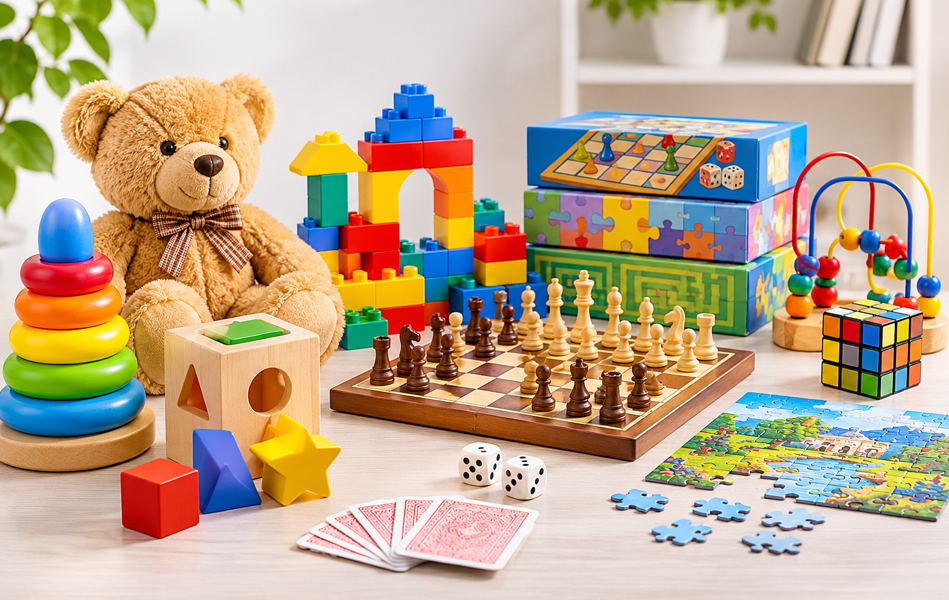
Choosing Toys & Games: A Guide to Fun, Creativity, and Learning
The best starting point for choosing a toy is the person who will use it. Interests, abilities, available space, and the people joining in all influence whether a purchase becomes a favorite or sits untouched. An impressive box or a long list of features cannot answer those questions on its own.
A thoughtful selection balances play value with the manufacturer’s age guidance, warnings, and instructions. Consider where the toy will be used and how its pieces will be stored. A manageable collection can support a wide variety of activities without requiring a room full of products.
Start with age guidance and the household
Read the age label and cautionary information before considering appearance or price. Age guidance is not simply a measure of how advanced a child seems. The product’s parts and intended use also matter, especially when younger children share the same home.
The CPSC explains that small parts can include an entire object, a separate component, or a piece that breaks off. Keep toys with small parts away from children under three and follow the specific warnings on the package. Review the CPSC’s small-parts guidance for more information.
Consider everyone who can reach the toy
A game selected for an older child may contain pieces unsuitable for a younger sibling. Plan a separate play and storage area when needed. After an activity, check the floor and furniture for loose components before opening the space to younger children.
Keep packaging instructions where adults can refer to them. Follow directions for assembly and battery compartments, and inspect the toy during use. If a part becomes loose or damaged, stop using the item until the issue is addressed according to the manufacturer’s guidance.
Look for activities that match real interests
Notice what the child chooses during unstructured time. Some enjoy arranging objects or building structures, while others prefer stories, drawing, music, or shared games. Select a product that connects to those interests instead of relying only on a broad educational label.
A toy can invite practice and exploration without guaranteeing a particular learning outcome. Avoid treating a product claim as proof that it will improve a skill. The experience also depends on how the item is introduced, how it is used, and whether the child wants to return to it.
Make room for open-ended play
Building pieces, suitable art materials, and pretend-play props can allow different activities across multiple sessions. Before purchasing, consider how many parts are included, how much space a project needs, and whether adult preparation is required.
Choose a starting point instead of a complete collection
A smaller set can reveal what the child enjoys before you add more pieces. Check compatibility information rather than assuming different sets will fit together. Similar colors or shapes do not establish that products from different ranges are designed to connect.
Provide enough clear space to begin and an easy place to pause or store an unfinished project. The ability to return to an activity may be more useful than adding another box of materials.
Choose board games around the group
Read the recommended player count, estimated play time, setup requirements, and age information. Think about the people most likely to join in. A game that needs four players may be an occasional activity in a two-person household.
Consider how the rules are explained. Look for a clear instruction booklet and a level of complexity that suits the group. Short rounds may work well for busy evenings, while a longer game may be better for a planned weekend session.
Balance challenge with a comfortable pace
Some players enjoy strategy and direct competition; others prefer cooperation or conversation. Selecting for the group’s preferences can make participation more inviting. Start with a practice round when helpful and use only variations supported by the instructions when they affect product use.
Check practical details before checkout
Review what is included and which supplies are needed separately. Batteries, extra materials, or a suitable play surface may add to the total cost. Also check cleaning and storage directions, particularly for toys shared by several children.
Measure large items before buying them. A product photo may not show the space needed for comfortable use, access, and cleanup. Confirm that the intended location works for the item rather than trying to squeeze it into a crowded area afterward.
Keep the collection usable over time
Organize games so pieces and instructions stay together. Label storage containers when it helps household members return items to the right place. Review the collection periodically for damage, missing components, and changing interests.
Browse our Toys & Games product category with a clear picture of the intended players and setting. Choose thoughtfully, follow age and safety information, and leave room for play to develop through shared time and repeated enjoyment.
Before the next purchase, revisit an activity already on the shelf. A familiar game with a different group or a fresh building challenge may offer an enjoyable afternoon without adding another item to store.